Monday, September 21, 2015

The Meaning of Archaeology - a student perspective

 (By Shelley Reece)


“What am I doing here?” 

This question, once voiced, gave everybody in Row 63 of the Western Sector a moment’s pause. 

Heads that had been bent in diligent archaeological silence raised tentatively, and glances were exchanged. 

There was no doubt that we were all asking ourselves this question, and inexplicably, we all began to giggle.
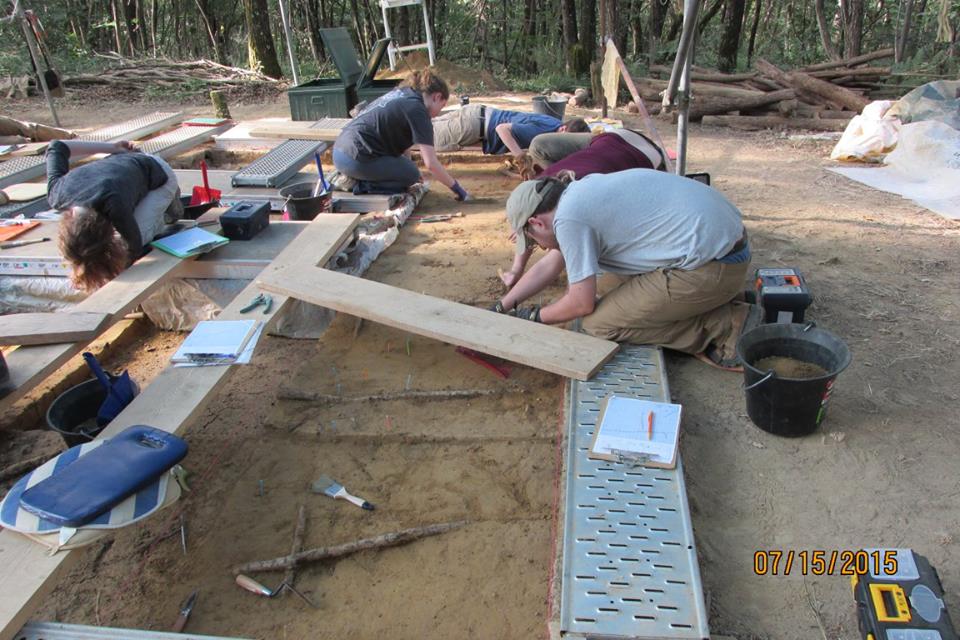
Fieldschool students excavating


Amid the laughter, the questioner continued. 

Monday, September 14, 2015

Interview with Peyre Blanque Archaeological Project field-director John O'hara


Patrice Bonnafoux: John, in the last few years, you've become one of the main players of the Peyre Blanque Archaeological Project, how did you get involved?

John O'Hara: Back in 2011, I was a grad student at New York University (NYU) and was trying to formulate a research project for my dissertation, and came to the realization that the Magdalenian was the period I needed to work on to address the types of question I'm interested in. 


Archaeologist John O'Hara discussing the excavation of the Eastern Sector (2014)

Wednesday, September 9, 2015

Site formation processes

In this video, Peyre Blanque Archaeological Project co-director Dr Kathleen Sterling explains the site formation processes to the 2015 field-school students.


Monday, August 17, 2015

Archaeology vs Conservation - a student experience

(By Jenna Hendrick)


This summer I had the opportunity of not only excavating at Peyre Blanque again, but joining the Centro di Conservazione Archeologica (CCA) in Sardinia, Italy to work on the conservation of the Mont’e Prama statues.

Picture of Nuragic Warrior

Wednesday, August 5, 2015

Interview of Rachel Kulick, the project micromorphologist


Patrice Bonnafoux: Hi Rachel, so you're the project micromorphologist, could you tell us what is micromorphology?

Rachel Kulick: Micromorphology is an approach to studying intact soil/sediment samples using microscopic techniques. 


The purpose is to identify the different soil/sediment parts and other contextual materials (like pieces of human-made tools -yes, it was not only the men, fragments of food, etc.) and to recognize the relationships between these components.

Tuesday, June 9, 2015

Protective structures

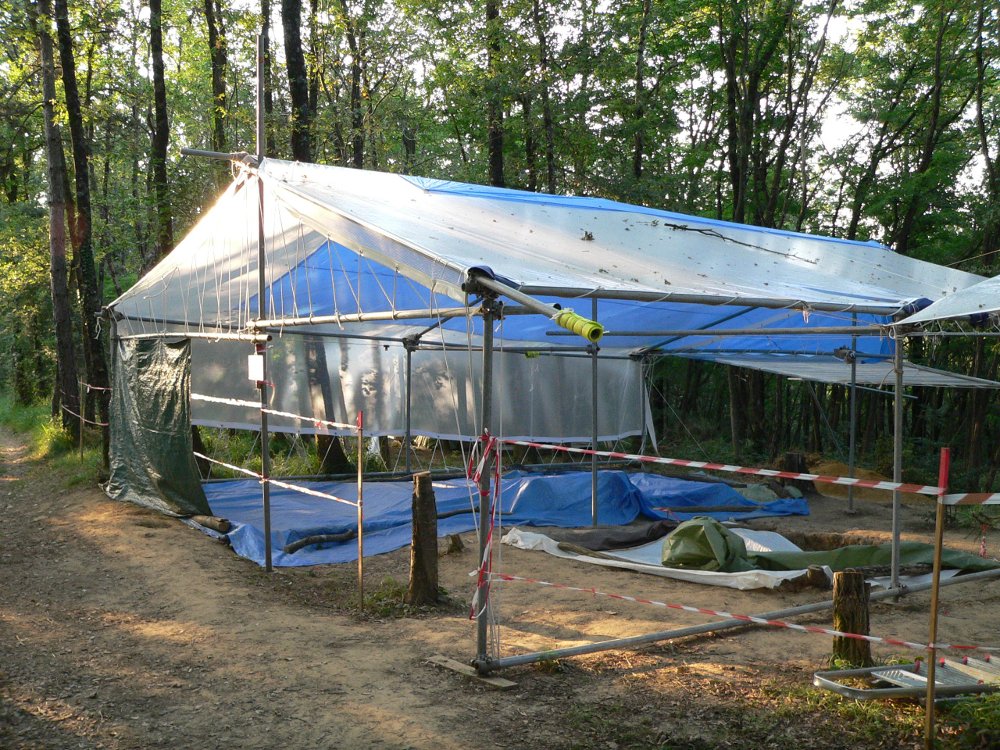
One striking feature of Peyre Blanque archaeological site is the protective structures (A.K.A 'super-structures') we set up above the excavations to protect both the units and the crew.

In 2014, 150 sq m were covered, but it has not always been like this...

Peyre Blanque Archaeological Site 2013

Tuesday, May 26, 2015

Public Outreach

Visits to the site are common. And it is always a pleasure to explain our research and share our discoveries.

Local associations, such as Volvestre Patrimoine, follow our work with interest and pay us a visit every year.


Tuesday, May 19, 2015

Peyreblanque.org launching

There are still some rough edges but we're getting there.